Platform comparison
| Platform | YES odds | NO odds | Fee | KYC | Settlement | |
|---|---|---|---|---|---|---|
Polymarket (via Is Polymarket Legal in Canada) Pick polygram.ink (preferred broker) |
50% | 50% | 0% (USDC on-chain) | No-KYC up to $1,500 | USDC, auto via UMA oracle | Open the market → |
Polymarket (direct) polymarket.com |
50% | 50% | 0% | Geo-blocked in US/UK/EU | USDC, on-chain | Open the market → |
Kalshi kalshi.com |
— | — | Up to 7% per trade | US-only, KYC required | USD | Open the market → |
Betfair Exchange betfair.com |
— | — | 2-5% commission | Full KYC from first trade | GBP / EUR | Open the market → |
Manifold Markets manifold.markets |
— | — | Play-money (mana) | None — play-money | Mana (no cash-out) | Open the market → |
Outcome probabilities
Current market-implied probability for each outcome, from the live order book.
| Outcome | Probability |
|---|---|
| Player G | 50% |
| Player H | 50% |
| Player Q | 50% |
| Player R | 50% |
| Player AA | 50% |
| Player AB | 50% |
| Player AG | 50% |
| Player AO | 50% |
| Player AP | 50% |
| Player A | 50% |
| Player B | 50% |
| Player I | 50% |
| Player J | 50% |
| Player K | 50% |
| Player L | 50% |
| Player S | 50% |
| Player T | 50% |
| Player U | 50% |
| Player V | 50% |
| Player AC | 50% |
| Player AD | 50% |
| Player AE | 50% |
| Player AF | 50% |
| Player AH | 50% |
| Player AI | 50% |
| Player AQ | 50% |
| Player AR | 50% |
| Player AS | 50% |
| Player AT | 50% |
| Player E | 50% |
| Player F | 50% |
| Player O | 50% |
| Player P | 50% |
| Player Y | 50% |
| Player Z | 50% |
| Player AK | 50% |
| Player AM | 50% |
| Player AN | 50% |
| Player AW | 50% |
| Player AX | 50% |
| Player C | 50% |
| Player D | 50% |
| Player M | 50% |
| Player N | 50% |
| Player W | 50% |
| Player X | 50% |
| Player AJ | 50% |
| Player AL | 50% |
| Player AU | 50% |
| Player AV | 50% |
| Other | 50% |
| Cameron Boozer | 22% |
| AJ Dybantsa | 19% |
| Caleb Wilson | 18% |
| Darryn Peterson | 16% |
| Darius Acuff Jr. | 12% |
| Mikel Brown Jr. | 6% |
| Keaton Wagler | 5% |
| Yaxel Lendeborg | 2% |
| Brayden Burries | 1% |
| Nate Ament | 1% |
| Joshua Jefferson | 0% |
| Kingston Flemings | 0% |
| Morez Johnson Jr. | 0% |
| Hannes Steinbach | 0% |
| Christian Anderson | 0% |
| Allen Graves | 0% |
| Cameron Carr | 0% |
| Alex Karaban | 0% |
| Koa Peat | 0% |
| Bennett Stirtz | 0% |
| Karim López | 0% |
| Sergio De Larrea | 0% |
| Tarris Reed Jr. | 0% |
| Dailyn Swain | 0% |
| Jayden Quaintance | 0% |
| Zuby Ejiofor | 0% |
| Aday Mara | 0% |
| Ebuka Okorie | 0% |
| Labaron Philon Jr. | 0% |
| Chris Cenac Jr. | 0% |
Market context
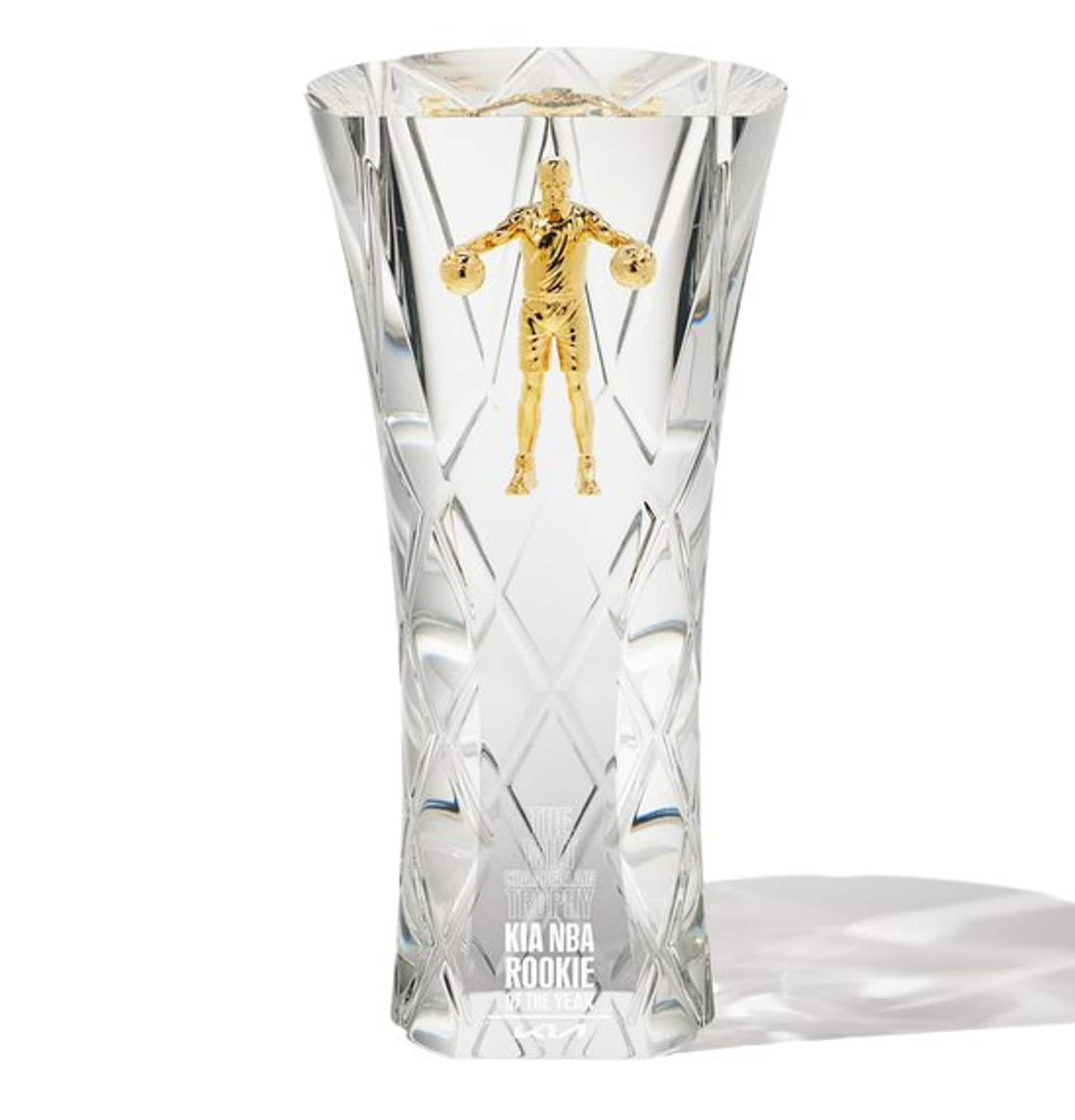
The real-world event this market tracks is the player who wins the NBA Rookie of the Year award for the 2026–27 regular season, with the official result declared by the NBA before May 2027. Current crowd-implied probability sits at 0% for any specific named outcome, reflecting the early stage of the season and the absence of a settled favourite among bettors despite sportsbooks opening Cameron Boozer as the initial leader[1][7]. Historically, early-season odds often shift dramatically once rookie performance data accumulates; for instance, in the 2024–25 cycle, Flagg was the early favourite but the award ultimately went to a different player once team roles and usage rates clarified[4]. Comparable cases show that third-overall picks like Boozer frequently outperform top picks in rookie-year awards due to better team fit and immediate scoring opportunities[1].
Traders should monitor the start of the 2026–27 NBA regular season in October, focusing on rookie usage rates, minutes played, and early statistical outputs, particularly for Boozer with the Memphis Grizzlies and Peterson with the Utah Jazz[1]. Key catalysts include the first month of game results, injury reports affecting rookie roles, and any mid-season coaching changes that alter offensive dependencies. Recent draft analysis from ESPN highlights which rookies are most likely to be rostered in fantasy basketball, offering a proxy for expected performance and visibility[2]. The market’s accessibility is shaped by regulatory frameworks: German GlüStV implications may restrict certain betting formats, while US CFTC reach influences how prediction markets operate legally. The “no-KYC up to $1,500” threshold means traders can access this market without identity verification for smaller stakes, enhancing liquidity but requiring caution regarding compliance in jurisdictions with strict KYC mandates. This structure supports broader participation while maintaining alignment with legal standards in Canada and the US.
Methodology
This overview of NBA: 2026-27 Rookie of the Year reviews the four comparable platforms from a regulatory perspective: which is accessible in your jurisdiction, where KYC kicks in, how the platform is classified by your country of residence. Live probability is the Polymarket mid; comparison columns show regulatory status, KYC thresholds and settlement options for each platform.
Resolution & payout
On Polymarket, resolution runs on-chain via UMA Optimistic Oracle. USDC payout is instant and automatic, with no KYC. Tax treatment depends on your jurisdiction — in the US, gains are usually ordinary income; in the UK, often capital gains. Consult a tax professional for your situation.
FAQ
- Do I need to KYC for Is Polymarket Legal in Canada?
- Not for lifetime trading volume under $1,500. Above that threshold, a quick KYC flow kicks in — ID, selfie, approximately 5-10 minutes. The threshold matches FATF travel standards for unregulated crypto platforms.
- How are winnings taxed?
- Tax treatment varies by jurisdiction. In most countries, prediction market gains are treated as ordinary income or capital gains. We cannot provide tax advice — consult a tax professional for your specific situation.
- Can I trade anonymously?
- Pseudonymously, yes — up to the KYC threshold. Is Polymarket Legal in Canada stores an email address and wallet addresses rather than a legal name. Over $1,500 lifetime volume triggers KYC, after which identity is no longer anonymous.
- Are prediction markets gambling?
- Legally unclear in most jurisdictions. Some interpretations classify them as wagering (gambling regulation applies), others as derivatives (financial regulation applies). There's no global precedent specifically for on-chain prediction markets.
- What if regulation changes?
- If regulation changes in your jurisdiction (e.g. prediction markets are banned), Is Polymarket Legal in Canada would geo-block the affected region and continue processing withdrawals. Your funds remain withdrawable at any time.
%22%2F%3E%3Cpath%20d%3D%22M%206%2066%20A%2026%2026%200%200%201%2058%2066%22%20fill%3D%22%23E6B98D%22%20opacity%3D%220.9%22%2F%3E%3Ccircle%20cx%3D%2232%22%20cy%3D%2226%22%20r%3D%2222%22%20fill%3D%22%23F5CBA7%22%2F%3E%3Crect%20x%3D%2210%22%20y%3D%224%22%20width%3D%2244%22%20height%3D%2214%22%20rx%3D%227%22%20fill%3D%22%237c3aed%22%20opacity%3D%220.9%22%2F%3E%3Crect%20x%3D%228%22%20%20y%3D%2218%22%20width%3D%228%22%20%20height%3D%2218%22%20rx%3D%224%22%20fill%3D%22%237c3aed%22%20opacity%3D%220.7%22%2F%3E%3Crect%20x%3D%2248%22%20y%3D%2218%22%20width%3D%228%22%20%20height%3D%2218%22%20rx%3D%224%22%20fill%3D%22%237c3aed%22%20opacity%3D%220.7%22%2F%3E%3C%2Fsvg%3E) and
and%22%2F%3E%3Cpath%20d%3D%22M%206%2066%20A%2026%2026%200%200%201%2058%2066%22%20fill%3D%22%23E6B98D%22%20opacity%3D%220.9%22%2F%3E%3Ccircle%20cx%3D%2232%22%20cy%3D%2226%22%20r%3D%2222%22%20fill%3D%22%23F5CBA7%22%2F%3E%3Cpath%20d%3D%22M%2010%2018%20Q%2016%204%2026%2010%20Q%2020%202%2032%206%20Q%2044%202%2038%2010%20Q%2048%204%2054%2018%22%20stroke%3D%22%237c3aed%22%20stroke-width%3D%224%22%20fill%3D%22none%22%20stroke-linecap%3D%22round%22%2F%3E%3C%2Fsvg%3E)
Trade NBA: 2026-27 Rookie of the Year on Is Polymarket Legal in Canada
Live order book, 0% fees, USDC settlement in seconds.
Open live market →