Platform comparison
| Platform | YES odds | NO odds | Fee | KYC | Settlement | |
|---|---|---|---|---|---|---|
Polymarket (via Is Polymarket Legal in Canada) Pick polygram.ink (preferred broker) |
57% | 43% | 0% (USDC on-chain) | No-KYC up to $1,500 | USDC, auto via UMA oracle | Open the market → |
Polymarket (direct) polymarket.com |
57% | 43% | 0% | Geo-blocked in US/UK/EU | USDC, on-chain | Open the market → |
Kalshi kalshi.com |
— | — | Up to 7% per trade | US-only, KYC required | USD | Open the market → |
Betfair Exchange betfair.com |
— | — | 2-5% commission | Full KYC from first trade | GBP / EUR | Open the market → |
Manifold Markets manifold.markets |
— | — | Play-money (mana) | None — play-money | Mana (no cash-out) | Open the market → |
Outcome probabilities
Current market-implied probability for each outcome, from the live order book.
| Outcome | Probability |
|---|---|
| December 31 | 57% |
| October 31 | 42% |
| September 30 | 24% |
| August 31 | 11% |
| July 15 | 0% |
| July 31 | 0% |
Market context
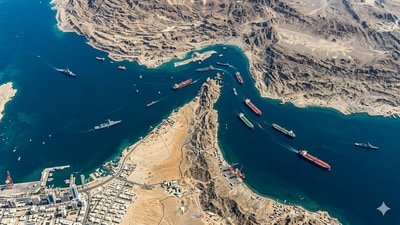
Iran has repeatedly floated the idea of monetising transit through the Strait of Hormuz, but the key distinction for this market is whether Tehran makes an **official, general fee regime** and actually starts collecting it from commercial vessels. Recent reporting says Iranian officials have described the concept as “navigational services” or environmental fees rather than tolls, which matters because the market only resolves yes if the payment is mandatory for passage or access, not if it is framed as a voluntary service charge or an isolated demand.[1][2][11]
The historical read-through is poor for a yes outcome because the legal baseline runs against a blanket charge. Under UNCLOS transit-passage rules, straits used for international navigation are meant to allow continuous and unimpeded passage, and Reuters reported that states can only impose limited fees for specific services such as piloting, tugging, or port services, not a general payment for merely crossing the strait.[11] The IMO has also said there is no legal basis for mandatory tolls simply to transit the Strait of Hormuz, while regional and legal commentary has treated the proposal as incompatible with the transit-passage regime.[3][16][19]
A trader should watch for a formal decree, published tariff schedule, or shipping notice that specifies who must pay, what service is being charged, and whether the charge applies generally to commercial traffic or only to a defined subcategory.[2][5][10] The most important catalyst is implementation, not rhetoric: a policy announced but not collected would still leave the market on the no side. On accessibility, German GlüStV rules are the practical blocker for some users because Polish or German-facing access can depend on local gambling-classification treatment, while US CFTC reach is relevant because American users may face restrictions depending on venue structure and use. “No-KYC up to $1,500” means a user can usually trade smaller amounts without identity verification, but only within that cap and subject to the platform’s jurisdictional controls; it does not change whether the underlying event can be settled.
Methodology
This overview of Iran charges Hormuz fees by 2026? reviews the four comparable platforms from a regulatory perspective: which is accessible in your jurisdiction, where KYC kicks in, how the platform is classified by your country of residence. Live probability is the Polymarket mid; comparison columns show regulatory status, KYC thresholds and settlement options for each platform.
Resolution & payout
On Polymarket, resolution runs on-chain via UMA Optimistic Oracle. USDC payout is instant and automatic, with no KYC. Tax treatment depends on your jurisdiction — in the US, gains are usually ordinary income; in the UK, often capital gains. Consult a tax professional for your situation.
FAQ
- Do I need to KYC for Is Polymarket Legal in Canada?
- Not for lifetime trading volume under $1,500. Above that threshold, a quick KYC flow kicks in — ID, selfie, approximately 5-10 minutes. The threshold matches FATF travel standards for unregulated crypto platforms.
- Can I trade anonymously?
- Pseudonymously, yes — up to the KYC threshold. Is Polymarket Legal in Canada stores an email address and wallet addresses rather than a legal name. Over $1,500 lifetime volume triggers KYC, after which identity is no longer anonymous.
- What happens during a tax audit?
- You're responsible for documenting your trades. Is Polymarket Legal in Canada exports a full transaction history (CSV/PDF) for tax reporting. In an audit you'll need to present these documents.
- Are prediction markets gambling?
- Legally unclear in most jurisdictions. Some interpretations classify them as wagering (gambling regulation applies), others as derivatives (financial regulation applies). There's no global precedent specifically for on-chain prediction markets.
- Is there a withdrawal cap?
- No platform-side cap. You can withdraw any amount provided KYC is complete. SEPA bank withdrawals over €15,000 trigger additional anti-money-laundering checks (statutory obligation for all platforms).
%22%2F%3E%3Cpath%20d%3D%22M%206%2066%20A%2026%2026%200%200%201%2058%2066%22%20fill%3D%22%23E6B98D%22%20opacity%3D%220.9%22%2F%3E%3Ccircle%20cx%3D%2232%22%20cy%3D%2226%22%20r%3D%2222%22%20fill%3D%22%23F5CBA7%22%2F%3E%3Crect%20x%3D%2210%22%20y%3D%224%22%20width%3D%2244%22%20height%3D%2214%22%20rx%3D%227%22%20fill%3D%22%237c3aed%22%20opacity%3D%220.9%22%2F%3E%3Crect%20x%3D%228%22%20%20y%3D%2218%22%20width%3D%228%22%20%20height%3D%2218%22%20rx%3D%224%22%20fill%3D%22%237c3aed%22%20opacity%3D%220.7%22%2F%3E%3Crect%20x%3D%2248%22%20y%3D%2218%22%20width%3D%228%22%20%20height%3D%2218%22%20rx%3D%224%22%20fill%3D%22%237c3aed%22%20opacity%3D%220.7%22%2F%3E%3C%2Fsvg%3E) and
and%22%2F%3E%3Cpath%20d%3D%22M%206%2066%20A%2026%2026%200%200%201%2058%2066%22%20fill%3D%22%23E6B98D%22%20opacity%3D%220.9%22%2F%3E%3Ccircle%20cx%3D%2232%22%20cy%3D%2226%22%20r%3D%2222%22%20fill%3D%22%23F5CBA7%22%2F%3E%3Cpath%20d%3D%22M%2010%2018%20Q%2016%204%2026%2010%20Q%2020%202%2032%206%20Q%2044%202%2038%2010%20Q%2048%204%2054%2018%22%20stroke%3D%22%237c3aed%22%20stroke-width%3D%224%22%20fill%3D%22none%22%20stroke-linecap%3D%22round%22%2F%3E%3C%2Fsvg%3E)
Trade Iran charges Hormuz fees by 2026? on Is Polymarket Legal in Canada
Live order book, 0% fees, USDC settlement in seconds.
Open live market →